
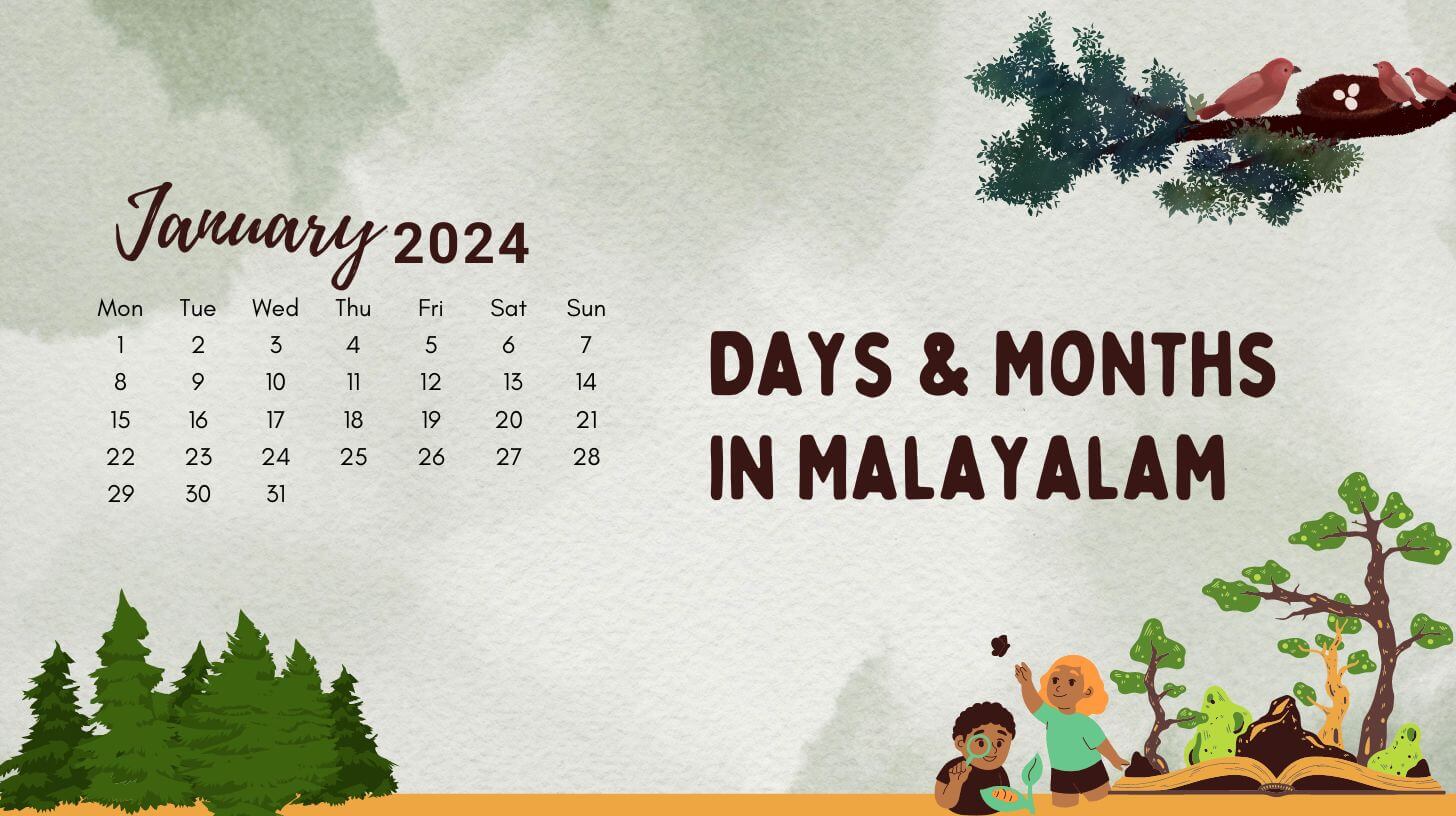
Days & Months in Malayalam
— Complete Beginner Guide
All 7 days of the week, 12 Gregorian months, and the traditional Malayalam calendar — with pronunciation, cultural context, festival guide & practice exercises.
Sunday in Malayalam is ഞായറാഴ്ച (Njayarazhcha). Monday is തിങ്കളാഴ്ച (Thinkalazhcha). If you needed that answer right now — you have it. But if you want to hold a real conversation about time, dates, and the calendar in Malayalam, there is a lot more worth knowing, and this guide gives you all of it.
Days and months are among the first vocabulary sets any language learner should master — they appear in everyday conversation constantly. But in Malayalam, there is an extra layer of richness: Kerala has its own traditional solar calendar, the Kollavarsham, with its own month names, its own rhythm, and its own festivals. Learning both systems — the Gregorian and the traditional — gives you genuine fluency, not just textbook knowledge.
🔗 Build Your Malayalam Vocabulary
Why Knowing Days & Months Matters in Kerala
For NRI families raising children outside Kerala, days and months are often the first real-world vocabulary they try to teach. A child who can say “Amma, innu Vyaazhaazcha aanu” (Mum, today is Thursday) has crossed a meaningful threshold — they are not just reciting words, they are using the language to live their day.
But the depth goes further. In Kerala, time is not just tracked by a calendar — it is marked by festivals, harvests, and religious observances tied to specific months. When a Keralite grandmother says “Karkidakam vannu” (Karkidakam has arrived), she is not just naming a month. She is signalling a season of reflection, rain, and Ramayana readings. When the word “Chingam” is spoken, the entire atmosphere of Onam — flower carpets, boat races, and sadya feasts — comes with it. No amount of Gregorian calendar knowledge can give you that cultural resonance. The traditional Malayalam calendar does.
🗓️ Two Calendars, One Culture
Keralites comfortably use two calendar systems simultaneously:
— The Gregorian calendar for work, school, and official dates.
— The Kollavarsham (Malayalam calendar) for festivals, astrology, weddings, and agricultural planning.
Knowing both makes you genuinely bilingual in time.
Days of the Week in Malayalam
The Malayalam names for days of the week follow a pattern rooted in classical Indian astronomy. Each day is named after a graha (planet or celestial body) — the same system used in Sanskrit, Tamil, and other classical Indian languages. Once you spot this pattern, the names become much easier to remember.
| English Day | Malayalam Script | Transliteration | Planet Root | Short Form (Spoken) |
|---|---|---|---|---|
| Sunday | ഞായറാഴ്ച | Njayarazhcha | Njayar (Sun) | ഞായർ (Njayar) |
| Monday | തിങ്കളാഴ്ച | Thinkalazhcha | Thinkal (Moon) | തിങ്കൾ (Thinkal) |
| Tuesday | ചൊവ്വാഴ്ച | Chovvazhcha | Chovva (Mars) | ചൊവ്വ (Chovva) |
| Wednesday | ബുധനാഴ്ച | Budhanazhcha | Budhan (Mercury) | ബുധൻ (Budhan) |
| Thursday | വ്യാഴാഴ്ച | Vyazhazhcha | Vyazham (Jupiter) | വ്യാഴം (Vyazham) |
| Friday | വെള്ളിയാഴ്ച | Velliayazhcha | Velli (Venus) | വെള്ളി (Velli) |
| Saturday | ശനിയാഴ്ച | Shaniyazhcha | Shani (Saturn) | ശനി (Shani) |
📖 Cultural Note: The Auspicious & Inauspicious Days
In traditional Kerala culture — particularly for Hindu families — certain days carry specific significance. Thursday (Vyazhazhcha) is considered highly auspicious, associated with Jupiter and often chosen for beginning new ventures or studies (Vidyarambham). Tuesday and Saturday are considered less ideal for starting important events in some traditions, while Friday (Velliayazhcha) is particularly significant for prayers at temples dedicated to the goddess Devi.
Example Sentences with Days
Knowing the names is one thing — using them naturally in conversation is another. Here are practical sentences using each day of the week, the way a Keralite would actually say them.
🗣️ Days in Real Sentences
Want to Speak Malayalam Confidently?
Reading vocabulary lists only takes you so far. Decode Malayalam’s structured courses include live practice sessions where you use days, dates, and conversations with a real teacher — from day one.
🎓 Book Your Free Demo Class →Gregorian Months in Malayalam
The 12 Gregorian months are used in Kerala for all official, school, and professional purposes. Their Malayalam names are phonetic adaptations of the English names — which makes them among the easiest vocabulary to learn. Notice that Malayalam preserves the sound but adapts it to its own phonetic system.
| # | English Month | Malayalam Script | Transliteration | Season in Kerala |
|---|---|---|---|---|
| 1 | January | ജനുവരി | Januvari | Cool & dry (Winter end) |
| 2 | February | ഫെബ്രുവരി | Phebruvari | Warm & dry (Pre-summer) |
| 3 | March | മാർച്ച് | Maarch | Hot season begins |
| 4 | April | ഏപ്രിൽ | Epril | Peak summer; Vishu festival |
| 5 | May | മേയ് | Mey | Pre-monsoon showers |
| 6 | June | ജൂൺ | Joon | Monsoon begins (Southwest) |
| 7 | July | ജൂലൈ | Julai | Peak monsoon; Karkidakam |
| 8 | August | ഓഗസ്റ്റ് | Ogast | Monsoon; Chingam & Onam |
| 9 | September | സെപ്റ്റംബർ | September | Monsoon retreating |
| 10 | October | ഒക്ടോബർ | October | Northeast monsoon begins |
| 11 | November | നവംബർ | November | Cool & pleasant |
| 12 | December | ഡിസംബർ | December | Cool; Christmas season |
The Malayalam Calendar (Kollavarsham)
The traditional Malayalam calendar — called കൊല്ലവർഷം (Kollavarsham) — is a solar calendar that has been used in Kerala for over a thousand years. Unlike the Gregorian calendar which begins in January, the Malayalam year begins in the month of Chingam (roughly August–September). The calendar is deeply embedded in Kerala’s cultural, religious, and agricultural life.
The name Kollavarsham is believed to derive from the city of Kollam (Quilon), where this calendar era is said to have originated in 825 CE. Even today, the Malayalam year number differs from the Gregorian year by roughly 825 years — so 2025 CE corresponds approximately to the Malayalam year 1200 Kollavarsham.
| # | Malayalam Month | Script | Transliteration | Gregorian Overlap | Key Festival / Significance |
|---|---|---|---|---|---|
| 1 | Chingam | ചിങ്ങം | Chingam | Aug–Sep | 🌸 Onam New year of the Malayalam calendar. The most celebrated month. |
| 2 | Kanni | കന്നി | Kanni | Sep–Oct | Navaratri begins; harvest season continues. |
| 3 | Thulam | തുലാം | Thulam | Oct–Nov | 🎆 Diwali Temple festival season across Kerala. |
| 4 | Vrischikam | വൃശ്ചികം | Vrischikam | Nov–Dec | 🪔 Mandalam Sabarimala pilgrimage season begins. Highly auspicious month. |
| 5 | Dhanu | ധനു | Dhanu | Dec–Jan | 🎄 Christmas Christmas celebrated widely; especially vibrant in Christian Kerala. |
| 6 | Makaram | മകരം | Makaram | Jan–Feb | ⭐ Makaravilakku Sabarimala’s Makaravilakku festival. Major pilgrimage culmination. |
| 7 | Kumbham | കുംഭം | Kumbham | Feb–Mar | Thrissur Pooram preparations begin; elephant festivals. |
| 8 | Meenam | മീനം | Meenam | Mar–Apr | 🎊 Thrissur Pooram Kerala’s grandest temple festival. End of Malayalam year. |
| 9 | Medam | മേടം | Medam | Apr–May | 🌅 Vishu Malayalam New Year (Gregorian April). Fireworks, Vishukkani, gifts. |
| 10 | Idavam | ഇടവം | Idavam | May–Jun | Edavapathi rains begin — the first early showers before the official monsoon. |
| 11 | Midhunam | മിഥുനം | Midhunam | Jun–Jul | Southwest monsoon fully active. Vidyarambham (beginning of learning) in some traditions. |
| 12 | Karkidakam | കർക്കിടകം | Karkidakam | Jul–Aug | 📖 Ramayana Month The most reflective month of the Malayalam year. See below. |
Malayalam Month × Festival Guide
Chingam (ചിങ്ങം) — The Month of Onam
Onam is Kerala’s defining festival — a 10-day harvest celebration that transcends religion and caste. It falls in the month of Chingam, traditionally when the star Thiruvonam (Sravana Nakshatra) rises. The festival celebrates the mythical return of the benevolent King Mahabali to his kingdom, and every Keralite household prepares the Pookalam (flower carpet) and Onam Sadya (the grand feast of 26+ vegetarian dishes served on banana leaves). When Keralites around the world hear “Chingam,” they smell the jasmine of a Pookalam.
Karkidakam (കർക്കിടകം) — The Month of Reflection
Karkidakam is perhaps the most culturally layered month in the Malayalam calendar. It falls during the peak of the southwest monsoon — July to August — when rains are relentless, paddy fields are flooded, and the ancient Kerala economy ground to a halt. Historically this was the hardest month — food was scarce, illness was common, and fishing was impossible. In response, a tradition evolved: every household in Kerala would recite the Adhyatma Ramayanam (a Malayalam version of the Ramayana composed by Thunchaththu Ezhuthachan, the father of the Malayalam language) throughout the month. The practice turned the most difficult month into the most spiritually rich one. Even today, thousands of Kerala homes observe Karkidaka Vavu (offerings to ancestors) and the month-long Ramayana recitation. A child who grows up hearing “Karkidakam vannu” understands that it is time to light a lamp and listen to the Ramayana — not just check a weather app.
Medam (മേടം) & Vishu — The Malayalam New Year
Vishu, celebrated when the sun enters the Medam sign (around April 14), is the astronomical new year of Kerala. The most important tradition is the Vishukkani — a carefully arranged display of auspicious items (a lit lamp, the Vishnu idol, raw rice, golden cucumber, coconut, betel leaves, coins, and new cloth) that is the first thing a Keralite must see on waking on Vishu morning. Seeing the Vishukkani first is believed to bring prosperity for the entire year. Children receive Vishukkaineettam — coins given by elders as a blessing.
🔗 Explore Kerala’s Culture Further
Yesterday, Today & Tomorrow — Essential Date Expressions
These are among the most-used time words in any Malayalam conversation. Master these and you can navigate most basic time-related discussions.
| English Expression | Malayalam Script | Transliteration | Usage Note |
|---|---|---|---|
| Today | ഇന്ന് | Innu | Most common. Used constantly. |
| Yesterday | ഇന്നലെ | Innale | Literally “yesterday’s day.” |
| Tomorrow | നാളെ | Naale | Also means “the future” informally. |
| Day after tomorrow | മറ്റന്നാൾ | Mattannaal | Very commonly used in Kerala. |
| Day before yesterday | മിനിഞ്ഞാന്ന് | Mininjaan | Longer word, but frequently used. |
| This week | ഈ ആഴ്ച | Ee Azhcha | “Azhcha” = week. |
| Next week | അടുത്ത ആഴ്ച | Aduththa Azhcha | “Aduththa” = next/coming. |
| Last week | കഴിഞ്ഞ ആഴ്ച | Kazhinja Azhcha | “Kazhinja” = past/gone. |
| This month | ഈ മാസം | Ee Maasam | “Maasam” = month. |
| This year | ഈ വർഷം | Ee Varsham | “Varsham” = year. |
| What is today’s date? | ഇന്ന് എന്ത് തീയതിയാണ്? | Innu enthu theeyathiyaan? | Most natural way to ask the date. |
| What day is today? | ഇന്ന് ഏത് ദിവസമാണ്? | Innu ethu divasamaanu? | “Divasam” = day. |
Pronunciation Guide for Days & Months
Malayalam has several sounds that do not exist in English. Here are the ones most relevant to days and months vocabulary.
🔤 Key Sounds to Master
ഞ (Nj) — The sound at the start of Njayarazhcha (Sunday). Say “ny” as in “canyon” very quickly — Nj. This sound does not exist in English.
ഴ (Zh) — The most distinctively Malayalam sound. It appears in Azhcha (week). It is a retroflex lateral approximant — curl your tongue back and produce a “zh” sound. Think of it as halfway between an “L” and a “zh” in “measure.”
ള (La) — A retroflex “L” — different from the standard English L. Tongue curls slightly back.
ട (Da/Ta) — A harder “D” or “T” produced with the tongue touching the roof of the mouth further back than in English.
Long vs Short Vowels — Malayalam distinguishes strictly. Maasam (month) has a long “aa” in the middle. Shortening it changes the meaning entirely.
For a complete guide to all Malayalam sounds and letters, visit our Malayalam letters and alphabet guide, which includes audio references and writing tips for each character.
Conversation Practice Drills
Language is learned by using it. Here are five complete mini-conversations about days and dates — practice these out loud, and then try substituting different days and months.
💬 Drill 1 — Asking What Day It Is
💬 Drill 2 — Asking the Date
💬 Drill 3 — Planning for Next Week
💬 Drill 4 — Talking About Months
💬 Drill 5 — Yesterday and Tomorrow
For more numbers to use in date conversations — like “the 15th” or “the 3rd” — explore our numbers in Malayalam guide.
Ready to Go Beyond Vocabulary Lists?
Real Malayalam fluency comes from conversation practice with a structured approach. Decode Malayalam’s online courses are built for NRI families, complete beginners, and heritage speakers — and every batch starts with a free demo class.
🎓 Book Your Free Demo Class Today →Frequently Asked Questions
Sunday in Malayalam is ഞായറാഴ്ച (Njayarazhcha). The first part, Njayar, refers to the Sun, and Azhcha means day of the week. In casual speech, Keralites often just say “Njayar” for short.
The 12 traditional Malayalam months are: Chingam, Kanni, Thulam, Vrischikam, Dhanu, Makaram, Kumbham, Meenam, Medam, Idavam, Midhunam, and Karkidakam. These belong to the traditional Malayalam solar calendar called Kollavarsham, and each month is approximately 30–31 days long, beginning when the sun enters a new zodiac sign.
Monday in Malayalam is തിങ്കളാഴ്ച (Thinkalazhcha). Thinkal means the Moon, making it literally “Moon-day” — the same logic as the English word “Monday” (from Moon’s day). In short form, Keralites say Thinkal.
You say “ഇന്ന് തിങ്കളാഴ്ചയാണ്” (Innu Thinkalazhchayaan). The word Innu means “today,” and aanu (abbreviated as yaan in spoken form) means “is.” You can substitute any day name to make the same sentence structure.
The Malayalam word for month is മാസം (Maasam). For example: Ee maasam = this month, aduththa maasam = next month, kazhinja maasam = last month.
Onam is celebrated during the Malayalam month of Chingam (ചിങ്ങം), which falls between August and September in the Gregorian calendar. The exact date is determined by the nakshatra (star) Thiruvonam, which is the most auspicious day of Onam.
Karkidakam (കർക്കിടകം) — July to August — is traditionally the most difficult month in Kerala, falling at the peak of the monsoon. It became the month of Ramayana recitation: families across Kerala read the Adhyatma Ramayanam (written by Thunchaththu Ezhuthachan, the father of Malayalam literature) every evening throughout the month. The practice transformed hardship into spiritual depth. Even today, it is observed widely, and Karkidaka Vavu (ancestor offerings at rivers) is a major ritual of the month.
The Malayalam calendar (Kollavarsham) is a solar calendar that begins in the month of Chingam (August–September), unlike the Gregorian calendar which begins in January. The Malayalam year number is approximately 825 years behind the Gregorian year (so 2025 CE ≈ 1200 Kollavarsham). Each Malayalam month begins when the sun enters a new zodiac sign, so the month boundaries shift slightly each year relative to the Gregorian calendar.
Explore More Malayalam Vocabulary
Days and months are your foundation. Here is what to learn next to build a well-rounded Malayalam vocabulary:
🔗 Continue Your Malayalam Journey
- Malayalam Letters & Alphabet — Master the Script
- Numbers in Malayalam — Count, Tell Time & Give Dates
- 100+ Fish Names in Malayalam — Kerala Food Culture
- Fruit Names in Malayalam — Tropical & Common Fruits
- Vegetable Names in Malayalam
- Zodiac Signs (Rashi) in Malayalam — Astrology Guide
- Modern Malayalam Baby Names with Meanings
- All 14 Districts of Kerala in Malayalam
The Malayalam language rewards every layer of learning you invest. Knowing that Thursday is named after Jupiter, that the monsoon month is a time of Ramayana recitation, that Onam falls in Chingam — these are not just facts. They are the threads that connect you to a living culture. Keep pulling.
Last updated: March 2026 | Source: Decode Malayalam | Author: Decode Malayalam Team