
Malayalam Numbers 1–100 With English Pronunciation
Featured answer: Learn Malayalam numbers 1–100 by mastering the base digits (Onnu, Randu, Moonnu, … Pathu) and the tens (Irupathu, Muppathu, Naalpathu). Combine tens + base with the connector sound (e.g., Irupathy onnu = 21). Practice tricky sounds like “zh” in Ezhu and the crisp “r” in Aaru to speak confidently in markets, buses, and everyday Kerala life.
Short hook: Count confidently in Malayalam — this guide gives clear pronunciations, patterns for forming numbers, cultural tips, and practice exercises so you can use numbers naturally in Kerala. For a broader overview beyond 100, you can later explore our main guide on numbers in Malayalam.
Introduction: The Rhythm of Kerala
Imagine stepping off a houseboat in Alleppey and walking into a small roadside shop. The vendor smiles and says, “Mu-pathu roopa.” If you know your numbers, you instantly know it means thirty rupees. Numbers are more than arithmetic in Kerala — they’re part of conversation, bargaining, telling time, and connecting with people.
Malayalam is phonetic: you say what you read. That makes it easier in one sense — consistent pronunciation — but the language has sounds unfamiliar to many Western learners. This guide moves from the single digits to full compound numbers (1–100), with clear English pronunciation, examples, and cultural notes to help you use numbers naturally.
By the end of this guide you’ll be able to count, say prices, tell times, and read phone numbers in Malayalam with confidence. Repeat aloud, listen to native speakers, and practice in short daily drills. If you are learning systematically, pair this with your Malayalam through English lessons for faster progress.
The Foundation: Numbers 1 to 10
These ten words are the backbone of the entire numbering system. Learn them first — everything else builds on these roots.
- Onnu — One-nu. Note: ‘O’ short as in “only”.
- Randu — Run-du. The final ‘u’ is very short.
- Moonnu — Moon-nu. Think “moon” + “nu”.
- Naalu — Naa-lu. Long ‘aa’.
- Anchu — Un-chu. Sounds like “un-chew”.
- Aaru — Aa-ru. Roll the ‘r’ slightly.
- Ezhu — Eh-zhu. Contains the retroflex ‘zh’.
- Ettu — Eh-ttu. Hard ‘t’.
- Onpathu — On-pa-thu. Soft ‘th’.
- Pathu — Pa-thu. Ten.
Practice tip: Make flashcards with the Malayalam word on one side and the pronunciation + an English cue on the other (e.g., “Moonnu — Moon-nu — moon”). Say them during daily routines to build muscle memory.
The Teens: Numbers 11 to 20
Malayalam uses a consistent pattern for numbers 11–19, built from Pathu (ten) combined with the base number, usually using the connector pathin- or related spoken contractions.
| Number | Malayalam | Pronunciation |
|---|---|---|
| 11 | Pathin-onnu | Pa-thin-on-nu |
| 12 | Pathin-randu | Pa-thin-run-du (often Pan-thrandu in fast speech) |
| 13 | Pathin-moonnu | Pa-thin-moon-nu |
| 14 | Pathin-naalu | Pa-thi-naa-lu |
| 15 | Pathin-anchu | Pa-thi-nan-chu |
| 16 | Pathin-aaru | Pa-thi-naa-ru |
| 17 | Pathin-ezhu | Pa-thi-neh-zhu |
| 18 | Pathin-ettu | Pa-thi-net-tu |
| 19 | Pathon-pathu | Pa-thon-pa-thu |
| 20 | Irupathu | E-ru-pa-thu |
Note: Spoken Malayalam often shortens or blends syllables. Listening to locals will help you internalize these contractions.
The Multiples of Ten: 10 to 100
These “tens” are the anchors used to construct all numbers up to 99.
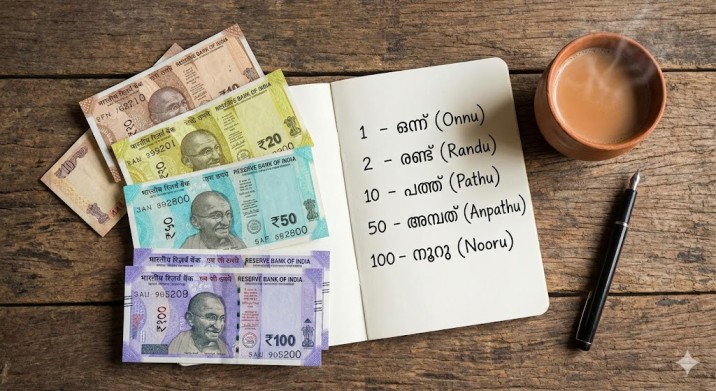
- 10 — Pathu (Pa-thu)
- 20 — Irupathu (E-ru-pa-thu)
- 30 — Muppathu (Mup-pa-thu)
- 40 — Naalpathu (Naal-pa-thu)
- 50 — Ambathu (Am-ba-thu)
- 60 — Arupathu (Ar-u-pa-thu)
- 70 — Ezhupathu (Eh-zhu-pa-thu)
- 80 — Enpathu (En-pa-thu)
- 90 — Thonnooru (Thon-noo-ru)
- 100 — Nooru (Noo-ru)
Tip: Memorize the tens first (20, 30, 40…) then attach single digits using the connector pattern explained below.
The Logic of Construction: Forming 21 to 99
Malayalam is agglutinative: numbers are formed by joining the tens word and the unit word with a linking sound. This linking is often an i or a soft change of the final vowel.
Examples:
- 25: Irupathu (20) + Anchu (5) → Irupathy anchu (pronounced Iru-pathy an-chu).
- 34: Muppathu (30) + Naalu (4) → Muppathy naalu.
- 99: Thonnooru (90) + Onpathu (9) → Thonnoory onpathu.
General rule: drop or change the final vowel of the tens word when joining, and insert the connector sound that makes the result flow naturally in speech. Listening to phrases like “Irupathy onnu” or “Muppathy naalu” will train your ear.
Practice exercise: Say aloud these sequences quickly: Onnu, Randu, Moonnu — Pathu, Irupathu, Muppathu — Irupathy onnu, Muppathy moonnu. The repetition trains the connector rhythm.
The Complete Malayalam Numbers Chart (text version)
Below is a grouped, screen-friendly list of numbers from 21 to 100 for quick scanning and practice. Use it as a cheat-sheet while learning.
The Twenties (Irupathu + …)
21: Irupathy onnu | 22: Irupathy randu | 23: Irupathy moonnu | 24: Irupathy naalu | 25: Irupathy anchu | 26: Irupathy aaru | 27: Irupathy ezhu | 28: Irupathy ettu | 29: Irupathy onpathu | 30: Muppathu
The Thirties (Muppathu + …)
31: Muppathy onnu | 32: Muppathy randu | 33: Muppathy moonnu | 34: Muppathy naalu | 35: Muppathy anchu | 36: Muppathy aaru | 37: Muppathy ezhu | 38: Muppathy ettu | 39: Muppathy onpathu | 40: Naalpathu
The Forties (Naalpathu + …)
41: Naalpathy onnu | 42: Naalpathy randu | 43: Naalpathy moonnu | 44: Naalpathy naalu | 45: Naalpathy anchu | 46: Naalpathy aaru | 47: Naalpathy ezhu | 48: Naalpathy ettu | 49: Naalpathy onpathu | 50: Ambathu
The Fifties (Ambathu + …)
51: Ambathy onnu | 52: Ambathy randu | 53: Ambathy moonnu | 54: Ambathy naalu | 55: Ambathy anchu | 56: Ambathy aaru | 57: Ambathy ezhu | 58: Ambathy ettu | 59: Ambathy onpathu | 60: Arupathu
The Sixties (Arupathu + …)
61: Arupathy onnu | 62: Arupathy randu | 63: Arupathy moonnu | 64: Arupathy naalu | 65: Arupathy anchu | 66: Arupathy aaru | 67: Arupathy ezhu | 68: Arupathy ettu | 69: Arupathy onpathu | 70: Ezhupathu
The Seventies (Ezhupathu + …)
71: Ezhupathy onnu | 72: Ezhupathy randu | 73: Ezhupathy moonnu | 74: Ezhupathy naalu | 75: Ezhupathy anchu | 76: Ezhupathy aaru | 77: Ezhupathy ezhu | 78: Ezhupathy ettu | 79: Ezhupathy onpathu | 80: Enpathu
The Eighties (Enpathu + …)
81: Enpathy onnu | 82: Enpathy randu | 83: Enpathy moonnu | 84: Enpathy naalu | 85: Enpathy anchu | 86: Enpathy aaru | 87: Enpathy ezhu | 88: Enpathy ettu | 89: Enpathy onpathu | 90: Thonnooru
The Nineties (Thonnooru + …)
91: Thonnoory onnu | 92: Thonnoory randu | 93: Thonnoory moonnu | 94: Thonnoory naalu | 95: Thonnoory anchu | 96: Thonnoory aaru | 97: Thonnoory ezhu | 98: Thonnoory ettu | 99: Thonnoory onpathu | 100: Nooru
Quick memorization tip: Learn the tens row (20, 30, 40…) vocally, then run through each row adding 1–9. Say them in a rhythmic chant for retention.
Cultural Context: Quarters, Halves, and Money
Numbers carry cultural meaning and are used in everyday life in ways that go beyond counting. Knowing common fractional and customary uses will make your Malayalam sound natural.
Common Fractions
- Ara — half. Example: “Ara kilo” (half a kilo).
- Kaal — quarter. Example: “Pathu-kaal” (ten and a quarter = 10:15).
- Mukkaal — three quarters. Example: “Path-mukkaal” (10:45).
Ritual & Social Uses
Dakshina — In some temple and gifting traditions, people give 101 instead of 100. The extra one rupee (Noory onnu) symbolizes continuation and prosperity. Similarly, 1001 (Aayirathy onnu) is used in ceremonies.
Money & Everyday Commerce
In markets, bus fares, and small shops, locals might mix English numerals with Malayalam words. Understanding both systems shows respect and helps you avoid mistakes when paying or bargaining.
Pronunciation Tips: Mastering the Tricky Sounds
Two or three sounds consistently trip up learners. They are worth special practice.
The ‘zh’ in Ezhu (7)
This is a retroflex approximant — neither English ‘z’ nor ‘l’. Technique: curl your tongue back so the underside of the tip touches the roof of your mouth and push air gently while voicing a sound like ‘r’ combined with ‘l’. Many learners substitute Elu and are understood; keep practicing the authentic sound for more natural speech.
The ‘r’ in Aaru (6) and Nooru (100)
This ‘r’ is a flap or light trill — crisp and percussive. Try tapping the tongue briefly against the roof of the mouth (similar to the Spanish single ‘r’ in “pero”).
The ‘th’ in Pathu (10)
It’s the soft dental ‘th’ as in “think”, not the voiced ‘th’ in “the”. Keep it breathy and soft.
Practical exercises
- Slow repetition: Say each number slowly, then at normal speed.
- Minimal pairs: Repeat “naalu / naal” vs “naalu / naalpa” to feel the differences.
- Record and compare: Use your phone to record your pronunciation and compare with a native speaker.
Patience and small daily drills (5–10 minutes) will yield fast improvement.
Frequently Asked Questions
1. What is the number 0 called in Malayalam?
Zero is called Poojyam in Malayalam, derived from Sanskrit. It’s used both in formal contexts and casual speech.
2. How do you say 1000 in Malayalam?
One thousand is Aayiram. You will hear it in prices, phone numbers, and large counts.
3. Is the Malayalam numbers chart the same as Tamil?
Malayalam and Tamil numbers are closely related and mutually intelligible in many cases, but they are not identical. Small differences exist in pronunciation and occasionally vocabulary (for example, “Moonnu” vs “Moonru”).
4. How do I ask “How much is this?” in Malayalam?
You can ask “Ithinu etra aayi?” or simply “Etra?” Both are commonly used when in markets or shops.
5. What is the hardest number to pronounce for learners?
Many learners find 7 (Ezhu), 70 (Ezhupathu), and numbers with repeated ‘zh’ sounds hardest because that retroflex sound is rare in Western languages.
6. Do Malayalis use English numbers?
Yes. Especially in cities and among the youth, English numerals and words are used frequently. However, rural areas and traditional markets often use Malayalam numbers, so learning both helps.
7. How do you say “First” and “Second” (ordinals)?
Ordinals are formed by adding -aam to the base: Onnaam (first), Randaam (second), Moonnaam (third).
8. What are “Lakh” and “Crore” in Malayalam?
The South Asian numbering system is used in Kerala: Oru Laksham (one lakh = 100,000) and Oru Kodi (one crore = 10,000,000). These terms are widely used in money and population counts.
9. How do you tell a phone number in Malayalam?
Phone numbers are usually read digit-by-digit for clarity. For example, the sequence 984 would be read as Onpathu – Ettu – Naalu (9-8-4).
10. What is 1,000,000 called?
One million is usually referred to as Pathu Laksham (ten lakhs) in Malayalam; “million” is understood but less commonly used in traditional contexts.
11. How can I practice numbers naturally while traveling?
Use numbers to read bus routes, call out prices when shopping, or practice giving your phone number. Small real-world interactions speed learning more than passive study.
12. Are there shortcuts for learners to be understood without perfect pronunciation?
Yes — many speakers will understand simplified pronunciations (e.g., “Elu” instead of “Ezhu”). However, attempts at correct pronunciation are appreciated by locals and help you learn faster.
Conclusion
Mastering Malayalam numbers 1–100 is an achievable, high-impact step toward fluent everyday communication in Kerala. Start with the base digits (Onnu–Pathu), learn the tens (Irupathu, Muppathu, Naalpathu…), and practice the connector pattern to form compound numbers. Pay special attention to the retroflex “zh” sound and the crisp Malayalam “r”. Small daily drills, real-world practice in markets or buses, and listening to native speech will make these words second nature.
Want more practice? Explore Decode Malayalam for printable number charts, audio pronunciation guides, and short listening drills specifically designed for beginners. You can also continue your journey with our Learn Malayalam guides to move from numbers into full sentences.
Pronunciation varies by region and speed of speech — the aim is communication, not perfection. Locals appreciate any effort to speak Malayalam.