

Picture this: you walk into a Kerala market — a bustling chantha — and the vendor fires a question at you in rapid Malayalam. What do you do?
If you know your vegetables in Malayalam, you smile, answer confidently, and walk away with exactly what you came for. If you don’t, you point and hope for the best.
This guide is here to make sure you’re in the first group.
Whether you’re learning Malayalam from scratch, cooking a Kerala recipe, or just trying to connect with a Malayali family member, knowing vegetable names in Malayalam is one of the most practical things you can learn. These are words you’ll use every single day.
We’ve put together 70+ vegetable names in Malayalam — complete with the Malayalam script, Manglish (Malayalam written in English letters), and useful cultural context. No jargon, no fluff. Just what you need.
📋 What’s in this guide
Don’t try to memorise everything at once. Start with these 10. They come up every day in cooking, shopping, and conversation across Kerala.
| Malayalam Script | Manglish | English |
|---|---|---|
| ഉരുളക്കിഴങ്ങ് | Urulakkizhang | Potato |
| ഉള്ളി | Ulli | Onion |
| തക്കാളി | Thakkali | Tomato |
| കാരറ്റ് | Carrot | Carrot |
| ഇഞ്ചി | Inchi | Ginger |
| വെളുത്തുള്ളി | Veluthulli | Garlic |
| തക്കാളി | Thakkali | Tomato |
| വെണ്ടക്ക | Vendakka | Lady’s finger (okra) |
| ചീര | Cheera | Spinach |
| പടവലങ്ങ | Padavalanga | Snake gourd |
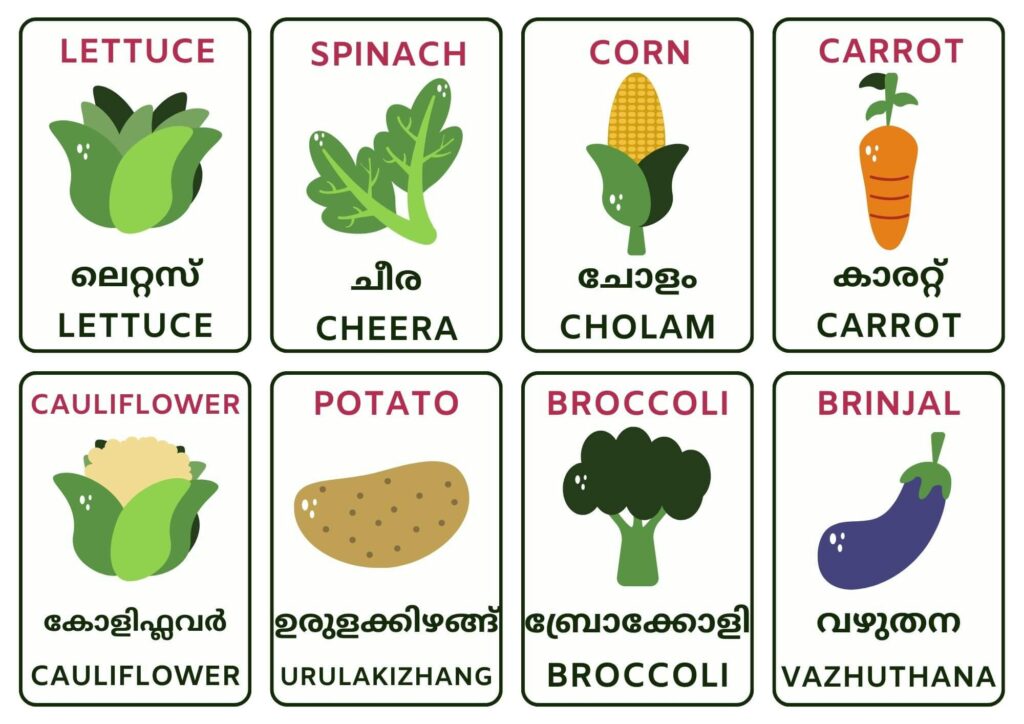
Common vegetable names in Malayalam — with script and English
Here is the complete reference table — Malayalam script, Manglish pronunciation, and English name — for every major vegetable you’re likely to encounter in Kerala homes, markets, and kitchens.
| Malayalam Script | Manglish | English |
|---|---|---|
| ചീര | Cheera | Spinach |
| ചുവന്ന ചീര | Chuvanna Cheera | Red spinach / Amaranth |
| മത്തങ്ങ | Mathanga | Pumpkin |
| വെണ്ടക്ക | Vendakka | Lady’s finger (okra) |
| തക്കാളി | Thakkali | Tomato |
| ബീറ്റ്റൂട്ട് | Beetroot | Beetroot |
| കാരറ്റ് | Carrot | Carrot |
| ഇഞ്ചി | Inchi | Ginger |
| ഉരുളക്കിഴങ്ങ് | Urulakkizhang | Potato |
| പച്ചമുളക് | Pacha Mulak | Green chilli |
| ചുവന്ന മുളക് | Chuvanna Mulak | Red chilli |
| മധുര കിഴങ്ങ് | Madhura Kizhang | Sweet potato |
| കൂർക്ക | Koorka | Chinese potato |
| പാവയ്ക്ക | Pavaykka | Bitter gourd |
| വെളുത്തുള്ളി | Veluthulli | Garlic |
| വഴുതനങ്ങ | Vazhuthananga | Brinjal (eggplant) |
| ചേന | Chena | Elephant foot yam |
| ചേമ്പ് | Chembu | Taro root |
| ക്യാബേജ് | Cabbage | Cabbage |
| പച്ച മാങ്ങ | Pacha Manga | Raw mango |
| വെള്ളരിക്ക | Vellarikka | Cucumber |
| കക്കരിക്ക | Kakkarikka | Salad cucumber |
| കൂൺ | Koon | Mushroom |
| ലെറ്റൂസ് | Lettuce | Lettuce |
| ചോളം | Cholam | Corn / Maize |
| കോളിഫ്ലവർ | Cauliflower | Cauliflower |
| ബ്രോക്കോളി | Broccoli | Broccoli |
| കാപ്സിക്കം | Capsicum | Capsicum / Bell pepper |
| കുരുമുളക് | Kurumulak | Black pepper |
| മുള്ളങ്കി | Mullanki | Radish |
| കുമ്പളങ്ങ | Kumbalanga | Ash gourd |
| ഉള്ളി | Ulli | Onion |
| ചെറിയ ഉള്ളി | Cheriya Ulli | Shallot |
| ഉരുളൻ ഉള്ളി | Urulan Ulli | Spring onion |
| കപ്പ | Kappa | Tapioca |
| ഗ്രീൻ പീസ് | Green Peas | Green peas |
| പടവലങ്ങ | Padavalanga | Snake gourd |
| ചുരക്ക | Churakka | Bottle gourd |
| കോവൽ | Koval | Ivy gourd |
| പച്ച പപ്പായ | Pacha Pappaaya | Green papaya |
| മുരിങ്ങക്ക | Muringakka | Drumstick |
| മഞ്ഞൾ | Manjal | Turmeric |
| കൂവ | Koova | Arrowroot |
| ശതാവരി | Shathavari | Asparagus |
| വാഴപ്പിണ്ടി | Vazhapindi | Banana stem |
| വാഴക്കൂമ്പ് | Vaazhakoomb | Banana flower |
| പച്ച ഏത്തക്കായ | Pacha Ethakkaya | Raw banana |
| ഇഞ്ചിപ്പുല്ല് | Inchipullu | Lemongrass |
| മല്ലിയില | Malliyila | Coriander leaves |
| പുതിന ഇല | Puthina Ila | Mint leaves |
| കറിവേപ്പ് | Karivepp | Curry leaves |
| വഴുതന | Vazhuthananga | Brinjal (small) |
| ബോക് ചോയ് | Bok Choy | Bok choy |
| ഉലുവ | Uluva | Fenugreek leaves |
| ചേമ്പിലക്ക | Chembilakka | Colocasia leaf |
| അവരക്ക | Avaraka | Flat beans |
| പയർ | Payar | Yard long beans |
| തുവര | Thuvara | Pigeon pea (red gram) |
| ഉഴുന്ന് | Uzhunnu | Black gram |
| ചെറ്റ | Chetta | Bamboo shoot |
| നേന്ത്രക്കായ | Nenthrakkaya | Raw plantain |
| കൊണ്ടക്കടല | Kondakadala | Chickpeas |
| ഏത്തൻ | Ethan | Raw banana variety |
| ഒക്ര | Okra | Okra |
| ഫ്രഞ്ച് ബീൻ | French Bean | French beans |
| തണ്ണിമത്തൻ | Thannimathan | Watermelon |
| ഗോതമ്പ് | Gothambhu | Wheat |
| ചോറ്റുകാഴ | Chorukkazha | Sweet corn |
| ചുരയ്ക്ക | Churayykka | Ridge gourd |
| മാർക്കോൺ | Marcon | Marrow / Zucchini |
| ആർട്ടിചോക് | Artichoke | Artichoke |
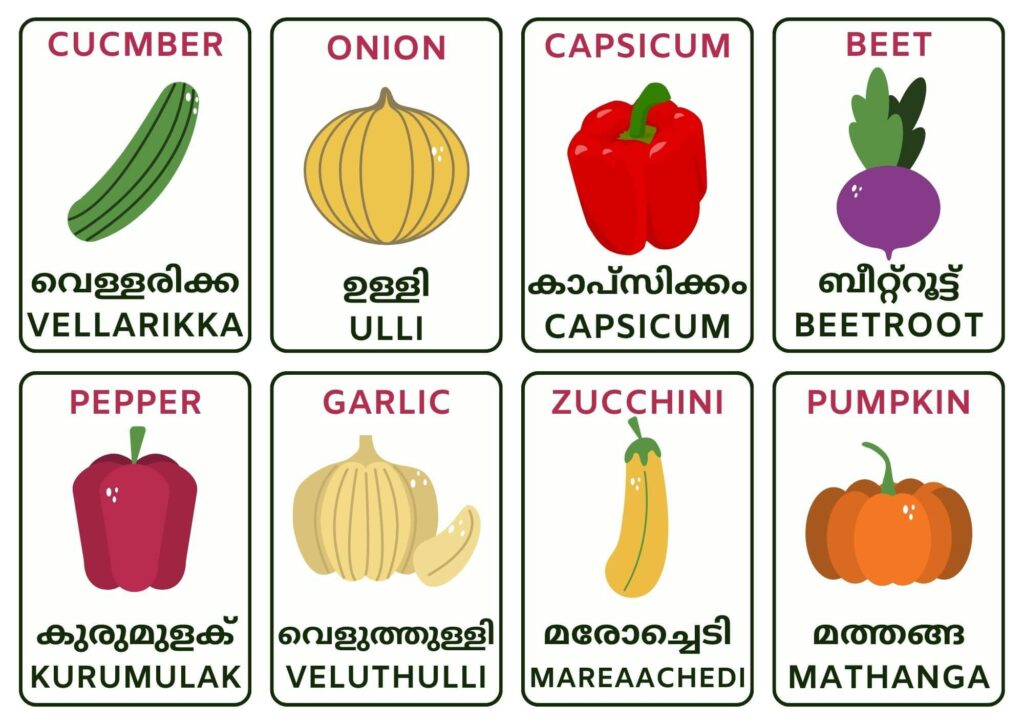
English and Malayalam vegetable names — side-by-side visual reference
Kerala’s cuisine is full of leafy vegetables — and local markets carry varieties you won’t find anywhere else in the world. Here are the most important ones to know.
This is one of the most commonly used greens in Kerala cooking. You’ll find Cheera stir-fried with coconut in nearly every home. There are two main types: Cheera (green spinach) and Chuvanna Cheera (red spinach / amaranth). If you ask for “Cheera” at a market, they’ll usually show you the green variety.
Curry leaves are practically the soul of Kerala cooking. You’ll smell them the moment they hit hot oil. The Malayalam name Karivepp comes from kari (curry) and vepp (leaves). Almost no Kerala dish is complete without a handful of these.
Known as Malliyila, fresh coriander leaves are used as a garnish across Kerala. If you’re asking for them at a market, just say “Malliyila tharenam” — meaning “I need coriander leaves.” It works every time.
Drumstick is far more than just a vegetable in Kerala — it’s a tradition. The long green pods go into sambar, avial, and countless curries. Even the leaves (muringayila) are cooked and eaten. This is a word worth memorising early.
You won’t find this in most Western grocery stores, but in Kerala, banana flower curry is a beloved dish. The maroon blossom at the tip of a banana bunch — that’s Vaazhakoomb. If someone says they’re cooking koomb thoran, they mean a dry stir-fry of banana flower with coconut. Delicious.
Kerala has more gourd varieties than almost anywhere else. Knowing their names will save you a lot of confusion at the market.
| Malayalam Script | Manglish | English | Common use in Kerala |
|---|---|---|---|
| കുമ്പളങ്ങ | Kumbalanga | Ash gourd | Avial, pulissery, juice |
| പടവലങ്ങ | Padavalanga | Snake gourd | Thoran, curry |
| ചുരക്ക | Churakka | Bottle gourd | Kootu, soup |
| പാവയ്ക്ക | Pavaykka | Bitter gourd | Theeyal, fry |
| കോവൽ | Koval | Ivy gourd | Mezhukkupuratti, thoran |
| മത്തങ്ങ | Mathanga | Pumpkin | Erissery, payasam |
| ചുരയ്ക്ക | Churaykka | Ridge gourd | Thoran, kootu |
Bitter gourd, called Pavaykka in Malayalam, is one of those vegetables people either love or strongly avoid. In Kerala, it’s usually made into a dry fry or a tangy curry called Pavaykka Theeyal. The bitter taste is balanced with tamarind and coconut — and once you try it that way, you might become a convert.
This pale green, waxy vegetable is a staple of Kerala wellness culture. Kumbalanga juice is widely consumed for digestion and cooling effects during summer. In cooking, it goes into Avial (a mixed vegetable dish) and Pulissery (yogurt-based curry). Learning this word will impress any Malayali you meet.
Kerala’s soil produces a remarkable range of root vegetables — many of which are rarely seen outside South India. These come up constantly in everyday Malayalam conversation.
| Malayalam Script | Manglish | English |
|---|---|---|
| ഉരുളക്കിഴങ്ങ് | Urulakkizhang | Potato |
| മധുര കിഴങ്ങ് | Madhura Kizhang | Sweet potato |
| ചേന | Chena | Elephant foot yam |
| ചേമ്പ് | Chembu | Taro root (colocasia) |
| കൂർക്ക | Koorka | Chinese potato |
| കപ്പ | Kappa | Tapioca / cassava |
| കൂവ | Koova | Arrowroot |
| ഇഞ്ചി | Inchi | Ginger |
| മഞ്ഞൾ | Manjal | Turmeric |
| മുള്ളങ്കി | Mullanki | Radish |
Kappa (tapioca) deserves a special mention. It’s a staple food in Kerala — not just a vegetable but a cultural symbol. Kappa Biriyani and Kappa Puzhukku (mashed tapioca with coconut and spices) are beloved dishes across the state. If you sit down to eat with a Malayali family and they serve Kappa, you’re being treated to something special.
Chena is a thick, rough-skinned yam that looks a bit like a giant grey rock at the market. Don’t let the appearance fool you — it’s rich, filling, and delicious when cooked properly. Chena Mezhukkupuratti (dry stir-fry with oil and spices) is a classic Kerala home-cooking dish.
In Malayalam, ginger is Inchi — short, simple, and used in almost every Kerala dish. Fresh ginger paste is a base for curries, ginger tea is a morning ritual, and pickled ginger appears in rice meals. If you learn no other root word today, learn Inchi.
These are the vegetables that appear on the shopping list of every Kerala household. Learn these and you’ll be able to handle any trip to a local market.
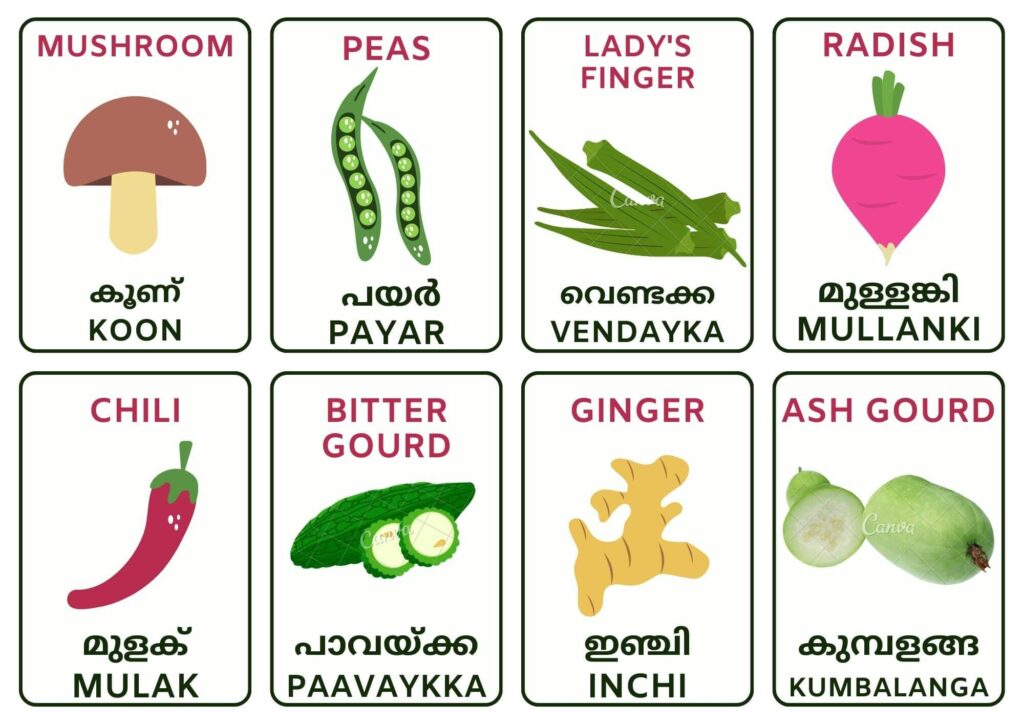
English to Malayalam vegetable names — a visual learner’s reference
Tomatoes — Thakkali in Malayalam — are in virtually every Kerala curry. The word has a wonderful ring to it. A quick pronunciation tip: say “thak-KA-lee” with the stress on the second syllable. Practice saying it once out loud right now and you’ll remember it for life.
Ulli is one of the easiest Malayalam words to learn — it’s short, crisp, and sounds almost like a playful exclamation. Kerala cooking uses onions in almost everything, from fish curries to egg roasts. There are also smaller varieties: Cheriya Ulli (shallots) are used in many traditional dishes and are considered more flavourful than regular onions.
Vendakka (lady’s finger / okra) is crispy when stir-fried and silky when cooked in curry. Vendakka Mezhukkupuratti — lady’s finger cooked in coconut oil with turmeric and chilli — is a simple, iconic Kerala dish. This is a word you’ll use at the market all the time.
Say it slowly: Ve-lu-thu-lli. It means “white onion” — veluthu (white) + ulli (onion). This is one of those Malayalam words where knowing the meaning actually helps you remember it. Garlic is an essential base in Kerala curries, especially fish and meat dishes.
Vazhuthananga is the standard word for brinjal (eggplant) in Kerala. It shows up in curries, pickles, and chutneys. The small, purple variety is especially common. In northern Kerala, you might also hear it called kathirikkai — a Tamil influence.
Knowing the words is step one. Using them is step two. Here are a few simple sentence patterns that will help you put these vegetable names to work straight away.
“Vendakka ethra varum?”
(വെണ്ടക്ക എത്ര വരും?)
→ How much for the lady’s finger?
“Oru kilo Thakkali tharenam.”
(ഒരു കിലോ തക്കാളി തരണം.)
→ I need one kilo of tomatoes.
“Inchi freshanu?”
(ഇഞ്ചി ഫ്രഷ് ആണോ?)
→ Is the ginger fresh?
“Ulli adukkuka.”
(ഉള്ളി അടുക്കുക.)
→ Chop the onion.
“Veluthulli ittittundo?”
(വെളുത്തുള്ളി ഇട്ടിട്ടുണ്ടോ?)
→ Have you added garlic?
Malayalam can look intimidating, but the script is phonetic — every letter has one fixed sound. Here are a few quick rules to help you say vegetable names correctly:
Short vowel “a” sounds like the “u” in “cup” — not like “cake.” So Mathanga is “Mu-THUN-ga” to a Malayalam ear.
Double letters matter. Thakkali has a strong “kk” — hold it a fraction of a second longer than a single “k.” It sounds different, and Malayalis will appreciate the effort.
“zh” (ഴ) is unique to Malayalam. It’s a retroflex sound — made by curling the tongue back. Words like Vaazhakoomb contain this. For beginners, saying a soft “l” sound instead is perfectly acceptable and understandable.
Endings matter. Many vegetable names end in -kka or -nga: Vendakka, Pavaykka, Padavalanga, Kumbalanga. Once you get the rhythm of these endings, pronouncing new words becomes easier.
Potato in Malayalam is ഉരുളക്കിഴങ്ങ്, pronounced Urulakkizhang. The word kizhang means “tuber” in Malayalam, so you’ll find similar endings on other root vegetables like sweet potato (Madhura Kizhang).
Tomato in Malayalam is തക്കാളി (Thakkali). It’s one of the most commonly used vegetables in Kerala cuisine — appearing in curries, chutneys, and rice dishes daily.
Lady’s finger (okra) in Malayalam is വെണ്ടക്ക (Vendakka). It’s a favourite in Kerala kitchens, often made as Vendakka Mezhukkupuratti — a simple dry stir-fry with coconut oil and spices.
Bitter gourd in Malayalam is പാവയ്ക്ക (Pavaykka). Despite its name, it’s a beloved vegetable in Kerala cooking — especially when made into Pavaykka Theeyal, a rich tamarind-coconut curry.
Drumstick is called മുരിങ്ങക്ക (Muringakka) in Malayalam. It’s widely used in Kerala’s sambar and avial, and even the leaves (Muringayila) are cooked as a nutritious side dish.
Tapioca in Malayalam is കപ്പ (Kappa). It’s a staple food in Kerala — particularly famous in the form of Kappa and Fish Curry, which is considered a quintessential Kerala meal.
Spinach in Malayalam is ചീര (Cheera). Red spinach is Chuvanna Cheera. Both varieties are commonly cooked as a dry stir-fry (Cheera Thoran) with grated coconut.
Garlic in Malayalam is വെളുത്തുള്ളി (Veluthulli) — literally “white onion.” It’s an essential ingredient in Kerala fish and meat curries, and often used raw in chutneys too.
Learning vegetable names in Malayalam is genuinely one of the best places to start — these are real, everyday words that come up constantly in conversation, at the market, and in the kitchen.
Here’s a simple challenge: the next time you cook, name each vegetable out loud in Malayalam as you prep it. Ulli. Thakkali. Inchi. Veluthulli. Do it three times this week and you’ll have these words for life.
If you want to go further — and learn to actually speak Malayalam in full sentences, understand native speakers, and hold a real conversation — there’s a faster way than studying alone.
Our native Malayalam tutors work with absolute beginners every day. In just a few sessions, you’ll move from vocabulary lists to real conversations. Book a free demo class and see how quickly Malayalam clicks when you learn with a real teacher.
👉 Book My Free Demo ClassAnd while you’re here — explore more Malayalam vocabulary: