Kerala Festivals List & Meaning Explained
Quick answer: Kerala’s festival calendar is woven from harvest, moon cycles and monsoon rhythms. The two pillars are Onam (the ten-day harvest festival welcoming King Mahabali) and Vishu (the astronomical New Year with the auspicious Vishukkani). Spectacle festivals like Thrissur Pooram (elephants, parasols and chenda melam) and the energetic Vallam Kali (snake boat races) follow. Religious celebrations — Christmas, Eid, Navaratri, Attukal Pongala and Theyyam — add layers of communal participation. These festivals are public, loud, and inclusive: food (Onasadya), flower carpets (Pookkalam), temple drums and boat songs are as central as the rituals themselves.
Short hook: Dive into Kerala’s festivals to feel the drums, taste the feast and experience why celebrations here are a living, shared language of community. If you’re planning a culture trip, pair this guide with our articles on festivals in Kerala, top temples in Kerala and hill stations to visit.
Introduction: The Rhythm of God’s Own Country
To step into Kerala during a festival is to step into a world where the air vibrates with the sound of the chenda and smells of payasam. Festivals in Kerala are public, loud and communal — they measure time by celebrations: harvest, moon phases and religious calendars. This Kerala festivals list explains what each major event means, how it’s celebrated, and how visitors can participate respectfully.
If you also want to understand the language and greetings you hear during celebrations, you can start with our Learn Malayalam hub or pick up everyday phrases from must-know Malayalam sentences.
Onam: The Grand Harvest Festival
Why it matters: Onam is the cultural heart of Kerala. Celebrated across religions and communities, it marks the homecoming of King Mahabali — a legendary ruler whose annual visit is welcomed with joy. For a deeper dive into rituals, games and Onasadya dishes, see our detailed guide on Onam festival in Kerala.
The Legend of King Mahabali
Mahabali’s rule was an era of equality and prosperity. Vishnu, in his Vamana avatar, sends the king to the netherworld but grants him a yearly return. Onam is the people’s way of welcoming Mahabali back.
How We Celebrate
- Pookkalam — intricate flower carpets created at doorsteps over several days.
- Onasadya — the grand vegetarian feast on banana leaf with 20–25+ dishes ending in payasam. For food lovers, our posts on top traditional food in Kerala and famous vegetarian dishes are perfect companions.
- Games & Dance — tug-of-war (vadam vali), Thiruvathira kali dance, Pulikali (tiger dance in some places).
Onam is ten days long, culminating in Thiruvonam, the main festival day.
Vishu: Waking Up to Prosperity
When: Usually in April (Medam month). Vishu marks the astronomical new year and the start of a new agricultural cycle.
The Meaning of Vishukkani
Vishukkani — the first sight at dawn — is arranged the night before: an uruli (metal vessel) with rice, golden cucumber, konna flowers, a mirror and coins. The idea: seeing auspicious items first brings prosperity for the year.
Fireworks, family visits, and simple, hopeful rituals define the morning. It’s a quiet, intimate festival focused on household blessings.
Thrissur Pooram: The Festival of Festivals
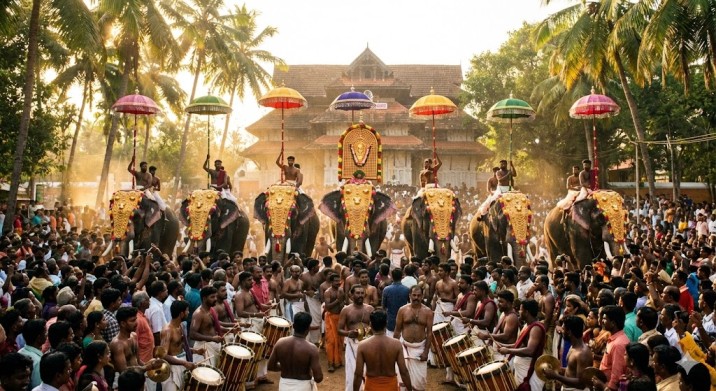
Thrissur Pooram is spectacle: caparisoned elephants, parasol-changing contests (kudamattam), and thunderous chenda percussion. Many visitors combine this with temple trails — you can discover more shrines in our guide to top 5 temples in Kerala.
The Elephants and the Kudamattam
At Vadakkunnathan Temple, two groups of temples present rows of elephants — each elephant adorned with golden nettipattam. During kudamattam, colourful umbrellas are flipped in rhythmic competition. The soundscape of chenda melam drives the crowd into a trance.
Thrissur Pooram is a vivid example of Kerala’s public festival culture — sensory, communal and cinematic.
Religious Celebrations: Christmas, Eid, Navaratri & More
Christmas in Kerala
Kerala’s Christians celebrate with distinct local customs: paper stars outside homes, midnight masses, and special breakfasts (often appam and stew). Many of the cultural trimmings are enjoyed across communities, much like Onam’s pookkalam and sadya.
Eid (Perunnaal)
Ramadan’s end is celebrated with feasts — Malabar biryani being central — and community prayers. Sharing food with neighbors is common.
Navaratri & Vijayadashami
While Navaratri is pan-Indian, Kerala’s Vijayadashami often becomes a celebration of learning: Vidyarambham (initiating children into letters) is widely practiced. If you’re exploring language learning traditions, you may enjoy our articles on Malayalam Aksharamala and reading and writing Malayalam.
Attukal Pongala
Held in Thiruvananthapuram, millions of women gather to cook offerings for the goddess — a massive, women-led festival with deep communal emphasis.
Theyyam
In North Kerala, Theyyam performances in temple groves are intense ritual dances where performers become possessed by deities — powerful, visceral and deeply local. Travellers often plan visits around Theyyam season using our guides to places to visit in Kannur and top places in Kasaragod.
Boat Races: The Rhythm of the Backwaters
Boat races (Vallam Kali) are water festivals driven by rhythm, stamina, and community pride. The Nehru Trophy Boat Race on Punnamada Lake (Alappuzha) is the most famous. If you’re drawn to backwaters and boats, also check our article on houseboats in Alappuzha.
Chundan Vallam (Snake Boats)
These long boats carry 80–120 rowers. The rowers chant vanchipattu (boat songs) in sync — the roars of oars make the race an ecstatic musical-sporting event.
Cultural Context: Why Festivals Matter in Kerala
Festivals here are expressions of kootayma — togetherness. They blur social boundaries and reaffirm communal bonds. Food, music and ritual create resets in social life. Even Malayalis who work abroad return for festivals: these moments tether people to family and land.
If you love this cultural side, you may also enjoy exploring traditional Kerala objects, the art of Kathakali and Mohiniyattam dance, which often feature in festival seasons.
Table: Month-by-Month Kerala Festivals Guide
| Month | Festival | Significance / Notes |
|---|---|---|
| January | Thiruvathira | Women celebrate marital harmony; dances for Lord Shiva. |
| Feb–Mar | Attukal Pongala | Mass women’s offering; Guinness record holder. |
| April | Vishu | Malayalam New Year; Vishukkani ritual. |
| Apr–May | Thrissur Pooram | Elephants, kudamattam, percussion extravaganza. |
| Aug–Sep | Onam | Ten-day harvest festival; pookkalam and onasadya. |
| Oct | Navaratri / Vijayadashami | Arts, learning rituals (Vidyarambham). |
| Dec | Christmas & Cochin Carnival | Religious and New Year celebrations in Fort Kochi. |
Malayalam Words for Festival Greetings
Using local greetings makes your wishes feel sincere. Here are simple, authentic phrases:
- Onam Ashamsakal — (Oh-nam Aa-sham-sa-kal) — Onam wishes.
- Vishu Ashamsakal — (Vi-shu Aa-sham-sa-kal) — Happy Vishu.
- Santhosham niranja Christmas — Happy Christmas filled with joy.
- Perunnaal Ashamsakal — Festival wishes (for Eid).
- Aghosham — Celebration; used to praise festivities.
Pronunciation guides help when typing Manglish in mobile messages. For more ready-made wishes and captions, see our New Year Malayalam greetings, birthday wishes in Malayalam and good morning wishes.
How to Participate as a Tourist
Dress the Part
For Onam or Vishu, wearing kasavu (off-white with gold border) is appreciated: mundu for men, saree for women.
Eat with Your Hand
If invited to an onasadya, eat with your right hand — mixing rice and curries with fingers is part of the experience.
Respect Temple Rules
Some inner sanctums restrict entry; men may need to remove shirts. Pooram processions outside temples are publicly accessible. Always ask locally before entering rituals.
Boat Races & Tickets
Major races like the Nehru Trophy have ticketed stands; book early during peak seasons. You can combine a race day with a houseboat stay in Alappuzha or visit nearby waterfalls in Kerala for a complete nature-and-culture experience.
Ten Frequently Asked Questions
1. Which is the biggest festival in Kerala?
Onam is the largest cultural festival — ten days of floral carpets, feasts and public celebrations observed by people across religions.
2. When is the best time to visit Kerala for festivals?
August–May covers most major festivals. Onam (Aug/Sep) and Thrissur Pooram (Apr/May) are peak cultural periods.
3. Are tourists allowed to watch Snake Boat Races?
Yes — popular races like the Nehru Trophy are tourist-friendly with viewing stands and facilities.
4. What is the “Women’s Sabarimala”?
Attukal Pongala in Thiruvananthapuram — a massive women-led offering that draws millions annually.
5. Do Christians in Kerala celebrate Onam?
Yes. Onam’s cultural aspects — pookkalam and onasadya — are embraced by many Christians and Muslims as part of regional identity.
6. What is Pulikali?
Pulikali, performed during Onam in Thrissur, is the tiger dance where men paint their bodies and dance to drum beats — a folk spectacle.
7. Is alcohol served during these festivals?
Traditional festival meals, especially Onasadya, are vegetarian and alcohol-free; social practices vary in different contexts.
8. What is the significance of elephants in festivals?
Elephants symbolize majesty and are often used to carry temple idols; caparisoned elephants are central to Poorams and temple processions.
9. Where can I see Theyyam?
Theyyam is primarily in North Kerala (Kannur/Kasaragod), performed October–May in ritual shrines; it is intense and spiritual. To plan your route, see our guides to Kannur and Kasaragod.
10. What does “Sadhya” mean?
Sadhya means feast — the festive vegetarian banquet served on banana leaf, central to Onam and many temple occasions.
Conclusion
This Kerala festivals list is more than dates — it is the pulse of a culture shaped by monsoon, harvest and shared ritual. From Onam’s floral carpets to the roar of boat races and the hush of Vishukkani, the festivals teach hospitality, rhythm and belonging. They welcome visitors with food, music and warmth.
Call to action: Explore more about Kerala’s culture on Decode Malayalam — from traditional Kerala objects and yoga in Kerala’s culture to learning Malayalam for real-life conversations during your next festival visit.
Disclaimer: Rituals and customs vary locally. This guide offers cultural context and travel tips — for specific temple rules or event schedules, check local sources and official organizers.